Define the challenge.
Share your application, current material and the performance or processing issue you want to address.
 Let’s talk ↗
Specialist consultancy in cable compounds, polymer formulation and extrusion processes. From HFFR and XLPE to EV charging and marine applications.
Years of experience.
A focused approach to your challenge.
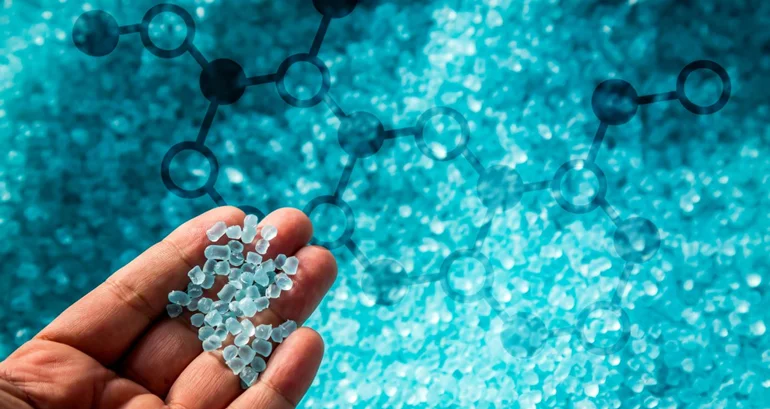
Connecting polymer science with the realities of industrial production.
With more than 20 years of experience in the plastics industry, Nova Polymer brings in-depth polymer knowledge and a practical understanding of cable manufacturing to every technical discussion. Our expertise connects compound formulation, product development and process optimization, helping you approach complex material challenges with a clear technical perspective.
Our focus spans HFFR, XLPE and XL-HFFR cable compounds, alongside EV charging cable materials, SHF2 offshore and marine sheathing, PVC, reactive extrusion and polymer modification. We consider formulation choices in the context of your application, equipment and processing conditions, so that development decisions reflect the realities of production.
We believe confidence comes from understanding the details. By combining technical research with application-focused guidance, we help you define requirements, evaluate alternatives and establish a structured path forward. Whether you are developing a new compound or reviewing an existing process, our approach is collaborative, thorough and tailored to your priorities.
See how we can help ↗Explore our technical focus areas.
Start with the challenge you want to solve.
 HALOGEN-FREE SYSTEMS
Balance flame retardancy, mechanical performance and extrusion behaviour for insulation and sheathing.
 CROSSLINKING
Develop crosslinkable systems with a coordinated formulation, extrusion and curing strategy.
 ELECTRON-BEAM CROSSLINKING
Design cable formulations around extrusion stability, irradiation response and end-use performance.
 E-MOBILITY
Flexible insulation and sheath concepts for repeated handling and demanding charging environments.
 OFFSHORE & MARINE
Crosslinkable halogen-free sheath development for shipboard and offshore cable applications.
 RENEWABLE ENERGY
Crosslinkable halogen-free systems developed around outdoor photovoltaic cable requirements.
 VERSATILE MATERIALS
Tune flexible and rigid PVC formulations to the application, production process and performance brief.
 POLYMER MODIFICATION
Connect polymer chemistry, mixing and residence time in a practical modification strategy.
 SPECIALTY COMPOUNDS
Evaluate mineral-filled polymer systems and composite core formulations as integrated material designs.
Targeted support at the stage where you need it most.
Start a conversation ↗Turn application requirements into a structured formulation brief. Review polymer blends, filler systems, additives and crosslinking options against mechanical, electrical, fire and environmental targets. Define trial priorities and the evidence needed to compare formulation iterations.
Discuss product development ↗Review the relationship between formulation rheology, screw configuration, temperature profile and residence time. Investigate dispersion, surface defects, pressure variation or premature crosslinking with attention to feeding, moisture, shear and thermal history. Establish a practical route to more consistent processing.
Discuss your process ↗Build development decisions on a clearer view of published technology. Review relevant patent families, technical literature and alternative formulation or process approaches. Use the findings to frame development options and questions for specialist intellectual-property review where needed.
Discuss technical research ↗Evaluate polymer modification, reactive extrusion and alternative material systems against a defined industrial need. Connect the proposed mechanism with processing constraints, material characterization and scale-up considerations, so that promising concepts can be assessed through purposeful trials.
Explore an opportunity ↗Our proposed starting point for your project.
Share your application, current material and the performance or processing issue you want to address.
Discuss relevant material systems, technical constraints and a suitable scope for collaboration.
Build a focused development or optimization plan around your priorities.
A technical perspective on the decisions that connect a promising formulation to a dependable cable system.
Compound development goes beyond selecting ingredients. The polymer architecture, filler interface, additive package and processing history work together to determine how a material behaves. Our starting point is to connect these variables with your cable design and an agreed validation plan.
Discuss your technical brief ↗For highly filled halogen-free compounds, fire performance and mechanical behaviour must be developed together. Increasing mineral content changes melt flow, density and the way stress is transferred through the polymer matrix. Filler dispersion and polymer–filler compatibility are therefore central development variables.
A useful formulation study compares alternatives against a common target profile: tensile strength and elongation, ageing retention, rheology, extrusion quality and the required fire-related tests. The goal is a repeatable balance across the properties that matter to the application.
Silane and electron-beam systems create different production requirements. Silane-based routes call for control of moisture exposure, catalyst handling and curing conditions. Electron-beam routes require the compound and cable construction to be assessed alongside irradiation penetration and dose distribution.
Crosslinking development should preserve the extrusion window while producing a consistent cured material. Hot-set behaviour, gel content where applicable and mechanical properties provide complementary information; a single result should be interpreted in the context of the full test programme. Irradiation conditions should be established with the processing specialist.
Charging cables are handled, bent, coiled and exposed to changing conditions. The development brief should address flexibility and surface durability alongside electrical and thermal requirements. Insulation, sheath and any filler materials also need to function as a compatible cable assembly.
The charging architecture sets the context for qualification. IEC 62893 includes general requirements and test methods, with distinct specifications for AC charging and DC systems. Thermally managed DC cables require a separate assessment of the cooling arrangement and material compatibility. Define the intended cable type before translating these requirements into compound targets.
Reference: IEC 62893-1 — general requirements ↗SHF2 identifies a crosslinked, halogen-free sheathing compound category. For marine and offshore projects, the material brief should distinguish the base category requirements from additional exposure requirements specified by the customer or cable design.
Enhanced oil resistance and drilling-fluid resistance need their own evaluation; they should not be assumed from the SHF2 designation alone. Similarly, a sheath material classification does not by itself establish the fire behaviour or circuit integrity of a complete cable. Define the environment, construction and test programme together, then evaluate the formulation and crosslinking conditions against that brief.
Reference: IEC 60092-360:2021 — insulating and sheathing materials ↗Agree the application, applicable specification and acceptance criteria before trials begin. Material screening, extrusion trials and finished-cable assessment answer different questions.
Compare mechanical, thermal and processing behaviour using a consistent preparation and conditioning method.
Review extrusion stability, surface quality, dimensions and cure development under representative conditions.
Confirm the relevant electrical, mechanical, environmental and fire-test requirements on the intended cable design.
 ↗
Material properties, extrusion conditions and quality standards.
 ↗
A closer look at approaches to Sioplas curing.
 ↗
Exploring the balance between material and process performance.
Tell us what you’re working on.
Let’s explore how Nova Polymer can help.